

NotesNature
The reef
A line of living rock, close to the sand, decides what the sea is like at Milagres.
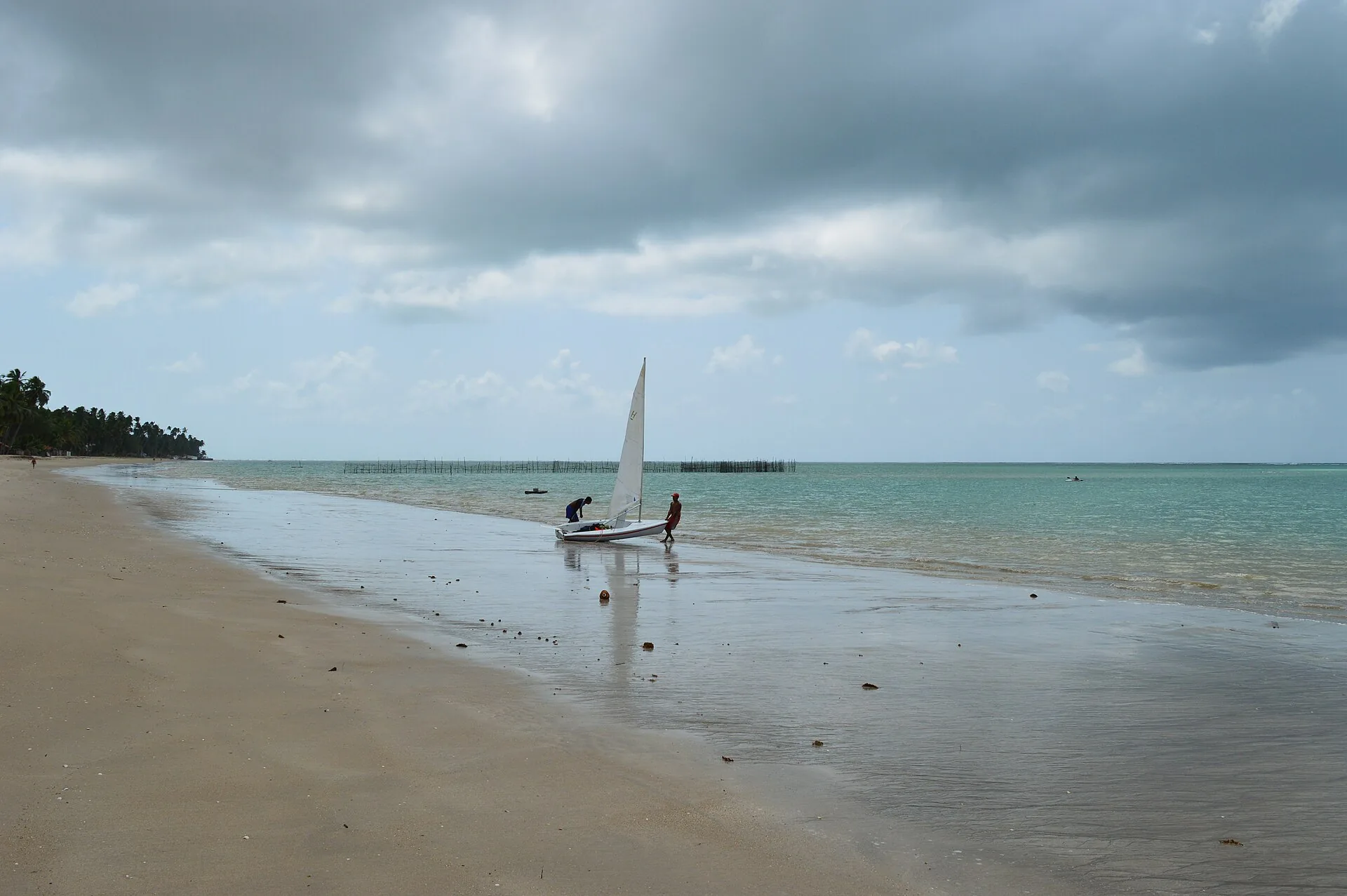
Seen from the sand, the northern coast of Alagoas has two colours of sea. Close to the beach, a pale, still green. Further out, beyond a dark line, the blue of the ocean. The line is the reef. Everything particular to São Miguel dos Milagres begins there.
The reefs of this coast are of two kinds, coral and sandstone. The sandstone reef is ancient beach, sand turned to rock. The coral reef is the work of minute animals that build in colonies, generation upon generation. Both run parallel to the sand and do the same job: they break the wave before it arrives.
That is why the sea by the beach is shallow and still. At low tide the rock shows, and between it and the sand lie pools of clear water where one walks knee-deep. At high tide everything vanishes, and it is simply sea again. The place has two faces a day, and those who keep coming learn the hour of each.
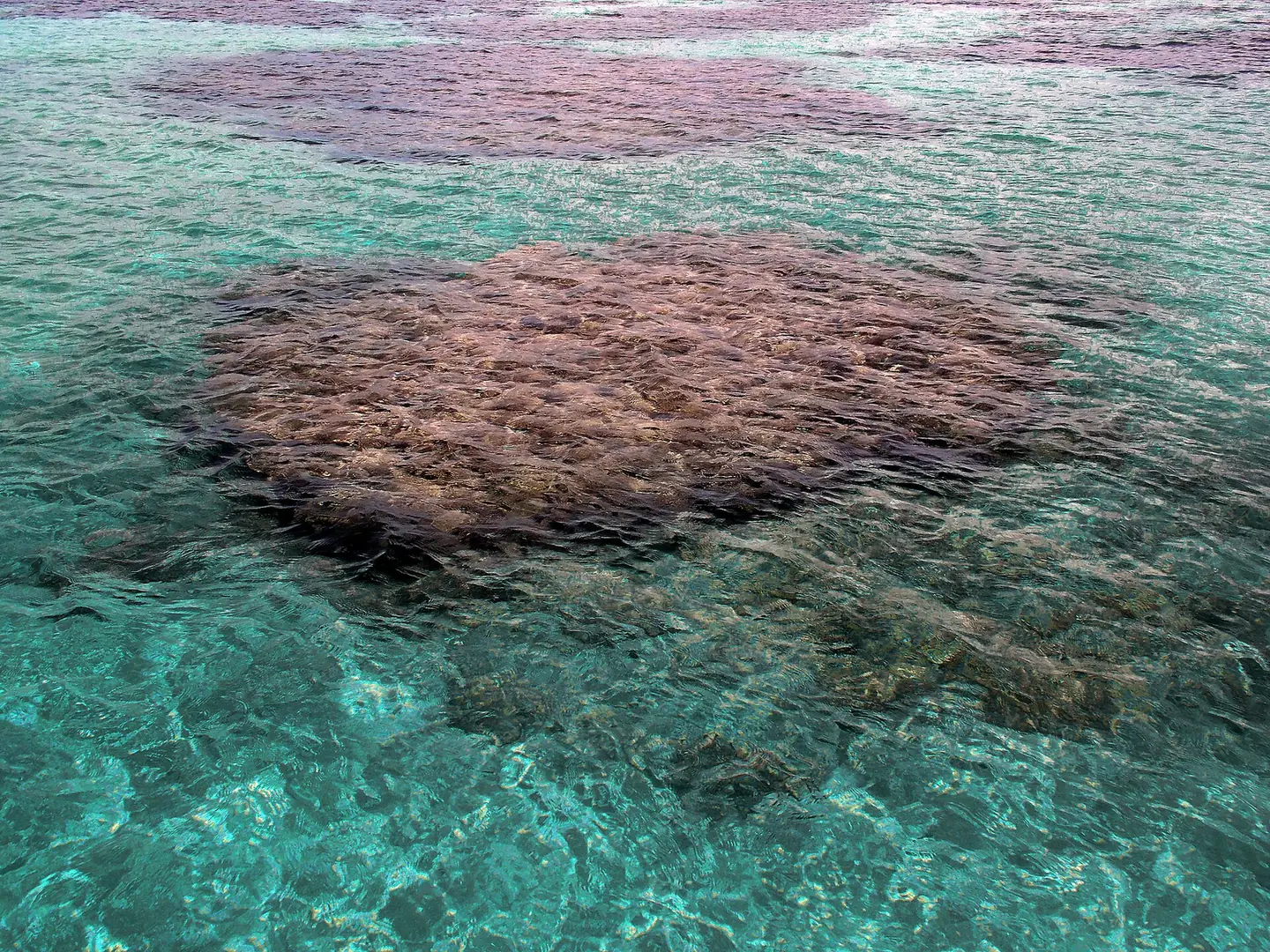
Since 1997 this coast has been protected. The Costa dos Corais Environmental Protection Area, created by federal decree and managed by ICMBio, covers more than a hundred kilometres of shoreline between Pernambuco and Alagoas. In 2025 it was enlarged. It exists precisely to safeguard the reefs, and what lives in them and because of them.
A coral reef is slow. It grows little each year, and what a foot breaks in an afternoon takes a very long time to mend. Hence the rules of the place, which are few and not open to debate: one does not step on the coral, one takes nothing away. One looks.
The beaches carry the names of villages: Toque, Porto da Rua, Riacho. Further north, in Porto de Pedras, Patacho. Between one and the next, coconut groves. One walks from one to another along the sand, with the reef always on the same side, like a low wall someone raised to protect the garden.
The place has two faces a day. Those who return learn the hour of each.
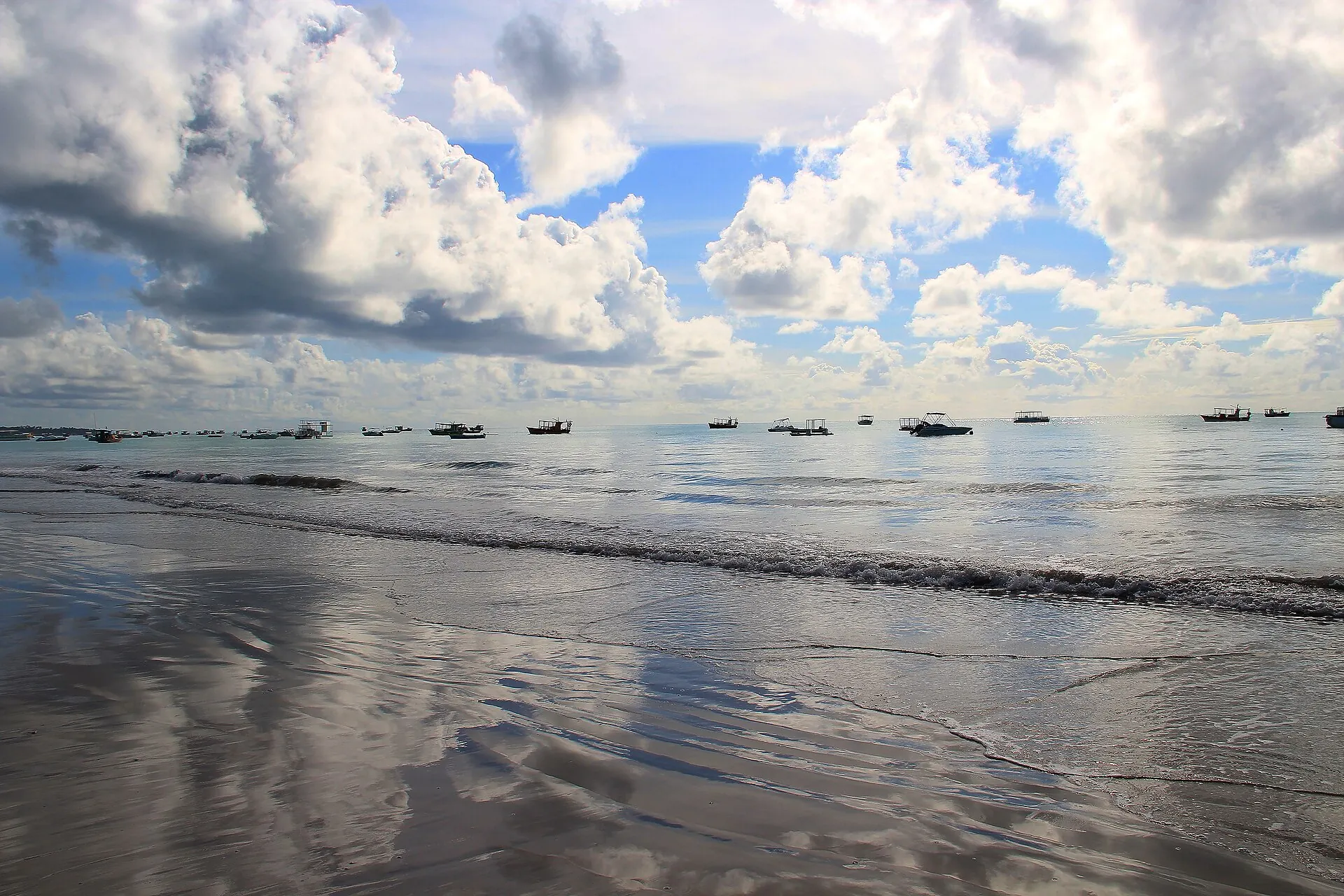
It is a landscape that does not shout. It has no cliffs, no surf, no mountain behind. It has one horizontal line of rock, another of palms, and between the two a water that barely stirs. Those looking for spectacle move on. Those who stay, stay for that stillness, which is rarer than it seems.
The name of the place came from the sea as well. Tradition has it that a fisherman found on the beach a carving of Saint Michael the Archangel covered in slime, cleaned it, and an old wound healed. The settlement, which was called Nossa Senhora Mãe do Povo, became "of the Miracles". The municipality dates from 1960; the story is a good deal older.
And then there is the hour. Every regular at Milagres has their own: a certain tide, a certain light, a certain point on the beach where the pool forms first. It cannot be taught. It is learned by returning, and kept the way one keeps an address.
Other Notes
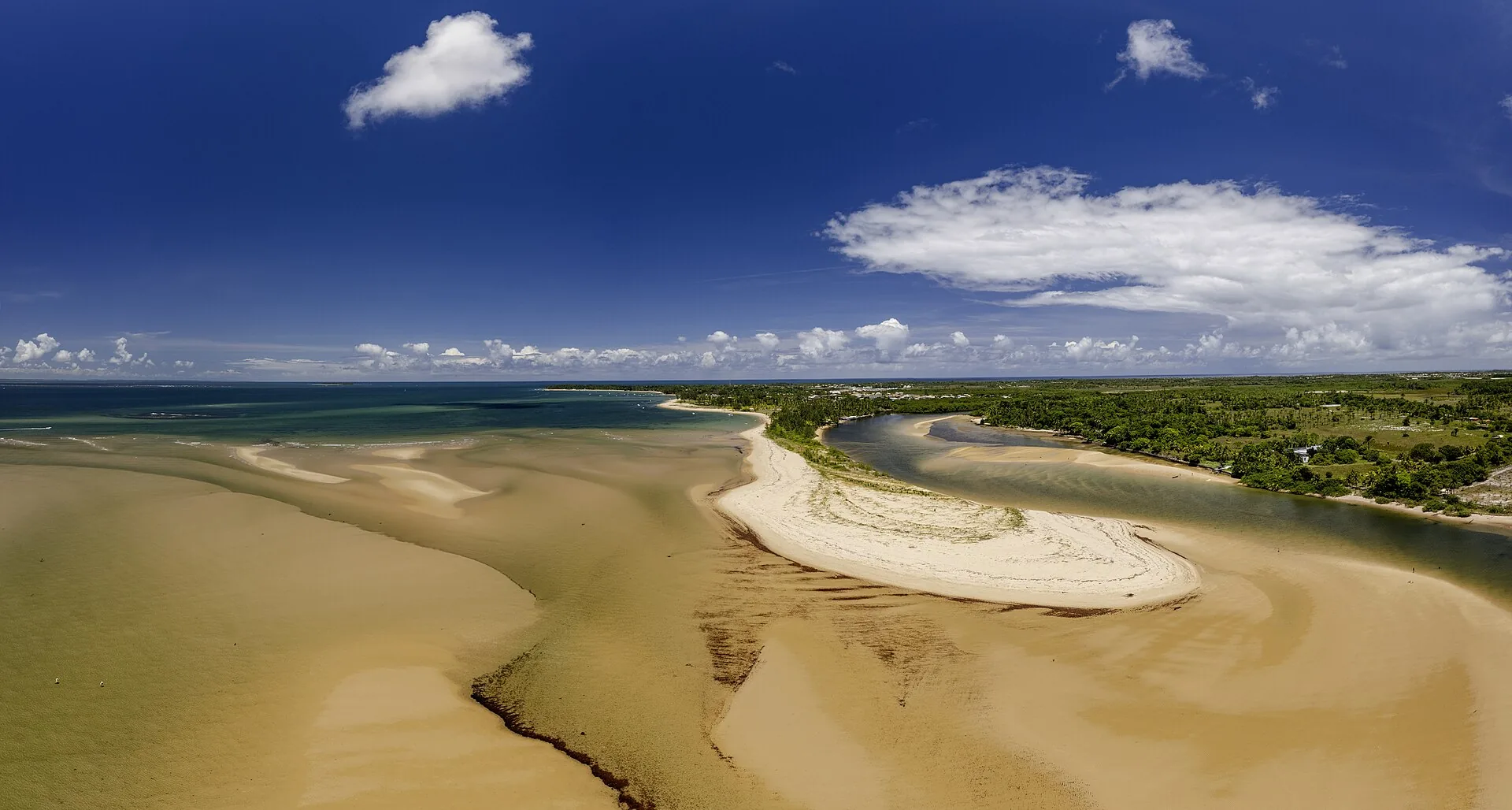
The saveiros of Cajaíba
On the far side of Camamu Bay, wooden boats are still built by hand.
Read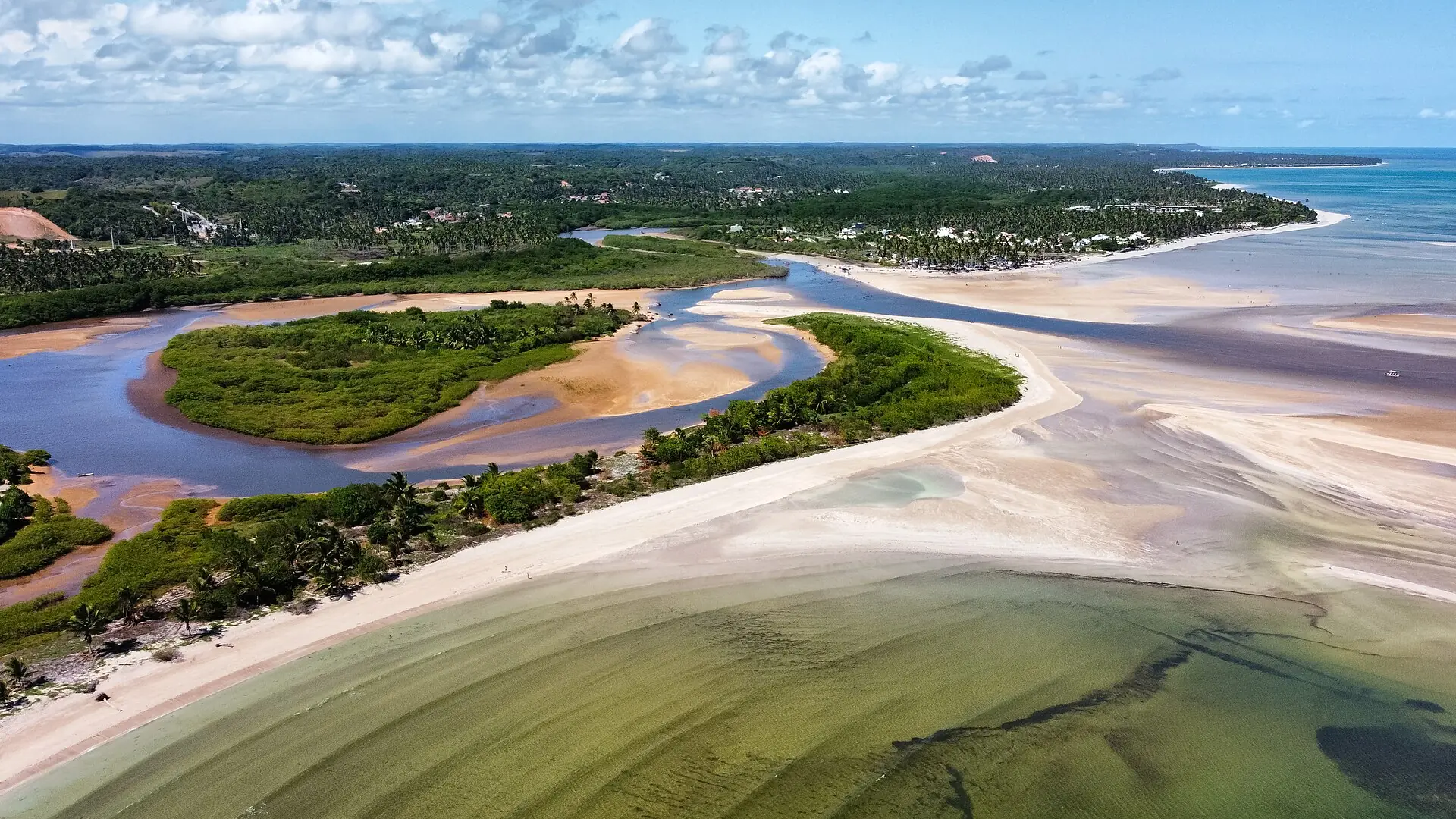
The river of the manatee
On the Tatuamunha, the gentlest animal of the coast has a river again.
Read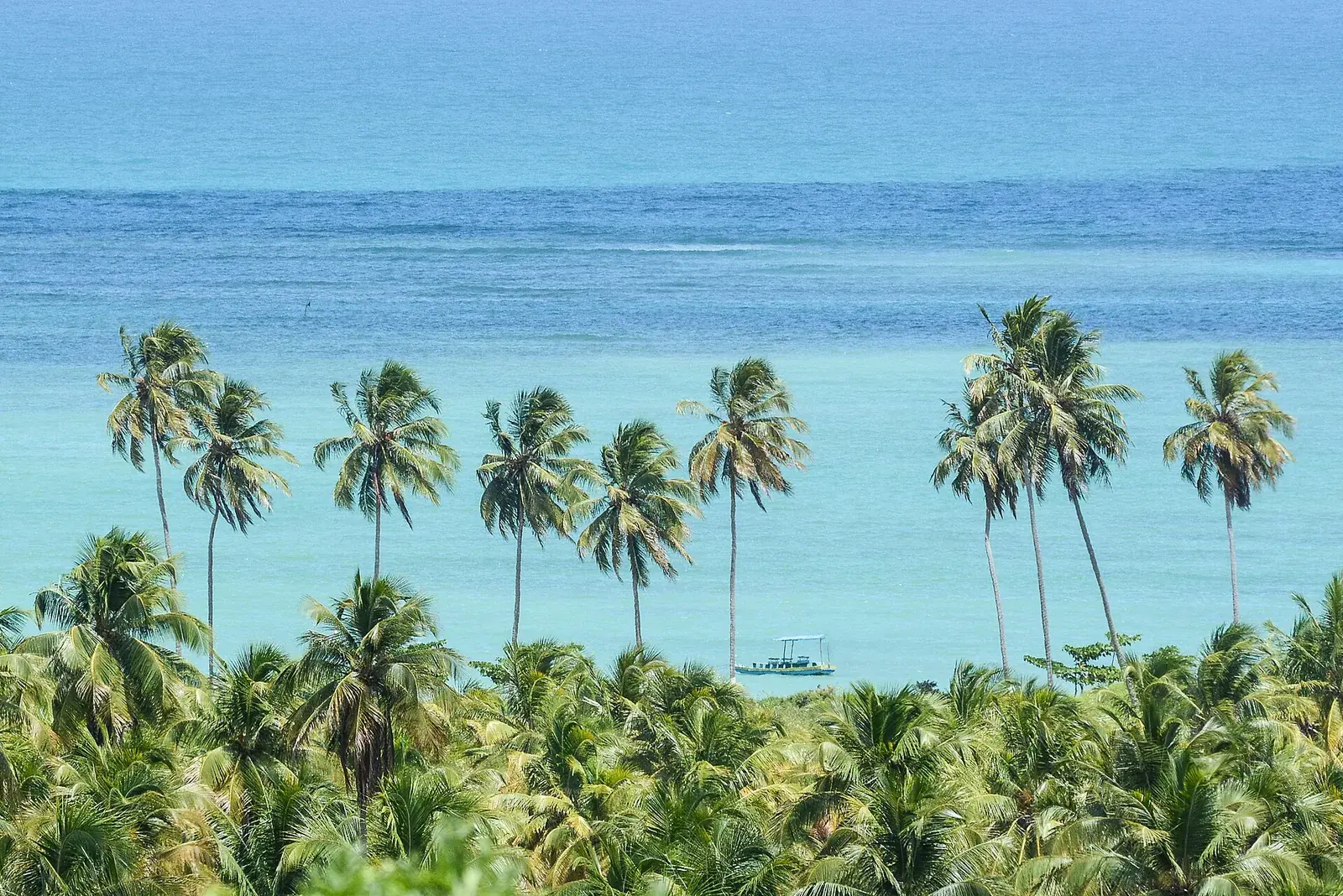
The coconut palm came from elsewhere
The tree that seems to have been born with the coast arrived by ship, in 1553.
Read